









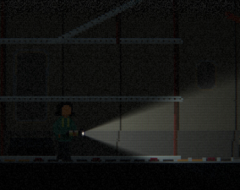


One More Flight
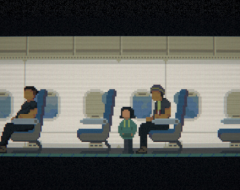
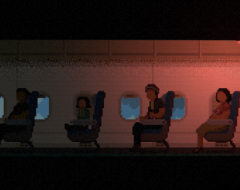
One More Flight is a 2D psychological horror adventure set aboard an airplane trapped in a repeating cycle of disaster. Every flight ends in catastrophe, but the protagonist has the opportunity to experience the journey again. The challenge is to understand what causes the tragedy, investigate the passengers, and discover how to prevent the crash. Unlike games where progress depends on collecting stronger equipment or improving character statistics, One More Flight revolves around observation, experimentation, and information gathered during previous attempts.

The airplane is both the main setting and the center of the mystery. Passengers follow their routines, unusual incidents occur in different parts of the cabin, and seemingly insignificant interactions can lead to unexpected consequences. The player must examine these events, identify connections between them, and gradually uncover what is happening aboard the aircraft.
A Flight That Always Ends in Disaster
The story begins with an airplane journey that appears ordinary. Passengers occupy their seats, the crew performs its duties, and the flight proceeds through familiar activities. However, the situation eventually develops into a catastrophe that the protagonist cannot initially prevent.
After the disaster, the journey begins again. The airplane returns to an earlier state, and the people aboard resume their previous routines. The protagonist remembers what happened, creating an opportunity to interfere with events that were previously unavoidable.
This repeating structure establishes the central conflict: the player knows that something terrible will happen but does not immediately understand its cause.
Several questions guide the investigation:
- What causes the airplane to crash?
- Which passengers are connected to the disaster?
- Why does the same journey repeat?
- Can individual deaths be prevented?
- Which events are unavoidable without intervention?
- What must change to break the cycle?
The answers are revealed gradually through exploration and experimentation. Instead of receiving a complete explanation at the beginning, players discover pieces of information that become meaningful when connected to observations from earlier flights.
The Time Loop as a Gameplay Mechanic
Every unsuccessful attempt returns the player to the beginning of the journey. Objects, temporary changes, and the physical results of previous actions disappear when the cycle resets. However, information obtained during earlier attempts remains useful.
This distinction is important because it changes the meaning of failure. A dangerous experiment may end with the protagonist’s death, but it can also reveal the location of a threat or the consequences of a particular decision.
The game includes a journal that preserves discovered information across repeated journeys. Players can use these records to remember important observations and avoid repeating unnecessary mistakes.
Progress through the loop involves several recurring activities:
- Explore the airplane and observe what happens.
- Identify an event that appears important.
- Experiment with an action that might change its outcome.
- Watch how passengers and surrounding events respond.
- Record useful information before the next attempt.
- Apply that knowledge during another flight.
The objective is not simply to survive for as long as possible. Players must discover which actions contribute to preventing the final catastrophe and which decisions create additional problems.
Looking Beyond the Passenger Seats
Exploration takes place in a side-scrolling environment that allows players to move through different sections of the aircraft. Although the airplane is a confined location, it contains numerous opportunities for investigation.
Passengers, luggage, service equipment, compartments, and other objects can provide clues. Some details may seem irrelevant during the first journey but become important after the player witnesses a related incident.
The game encourages attention to small changes in behavior and the timing of interactions. A passenger’s movements may reveal when a particular event is about to occur. An object that appears harmless may be connected to a dangerous sequence.
When examining the cabin, players should consider:
- Whether a passenger behaves differently at specific moments.
- Which objects can be examined or interacted with.
- Whether something happens before or after a particular action.
- Which parts of the airplane remain unexplored.
- Whether an unusual event is connected to another location.
Careful exploration can reveal information without requiring immediate intervention. Sometimes observing an incident from beginning to end is more useful than interrupting it before its consequences become clear.
Small Decisions With Larger Consequences
One More Flight uses interconnected events to make player decisions meaningful. Changing one situation can influence several others, sometimes in ways that are difficult to predict.
For example, interfering with a passenger’s drink may alter what happens later in the journey. Removing a dangerous object or preventing a threatening action can change the sequence of events aboard the airplane.
These interactions create puzzles based on cause and effect. The player must determine not only which action is possible but also when performing it produces the desired result.
A decision can have several consequences:
- Prevent an incident that previously caused a death.
- Change a passenger’s behavior or routine.
- Interrupt a sequence involving multiple people.
- Reveal information that was previously inaccessible.
- Create a different danger elsewhere in the cabin.
- Open a path toward another possible outcome.
This system encourages experimentation. A solution that seems successful at first may only postpone the problem or replace it with another threat.
Players must consider the wider consequences of their actions rather than treating every event as an isolated puzzle.
The Importance of Timing
Some situations in One More Flight depend on acting at a particular moment. The player may recognize an approaching danger but still need to discover exactly when intervention becomes possible.
Acting too early could fail to prevent the incident. Waiting too long may leave insufficient time to respond. Certain sequences demand quick decisions, while others require patience and careful observation.
This creates a connection between knowledge and execution. Understanding what must happen is only one part of the solution. Players also need to perform the correct action within the available time.
The game combines several types of challenges:
- Observation puzzles involving passenger routines.
- Timed interactions that require immediate action.
- Environmental puzzles based on objects and locations.
- Situations where several events influence one another.
- Hazard sequences that test movement and reactions.
- Investigations that require clues from earlier attempts.
The variety of challenges prevents the experience from becoming a simple process of memorizing a single sequence. Different situations require different approaches, and players must recognize which type of problem they are facing.
Ordinary Accidents and Supernatural Threats
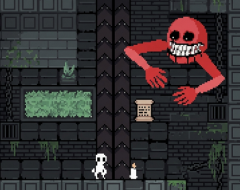
The danger aboard the airplane extends beyond mechanical failure or an ordinary aviation emergency. The game introduces fatal accidents, suspicious incidents, and supernatural elements that challenge the player’s understanding of the environment.
Some hazards involve recognizable situations, including poisoning, explosions, and dangerous falls. Others feature unnatural entities or events that do not follow normal expectations.
These threats contribute to the psychological horror elements of the experience. Players cannot assume that familiar places or apparently harmless objects are safe.
A corridor that seems empty during one moment may become dangerous later. A mirror or dark corner may conceal something that the protagonist has not encountered before.
Survival requires more than avoiding visible obstacles. Players must remember where threats appear, understand what triggers them, and determine whether they can be prevented.
Investigating the Airplane’s Hidden Areas
As players learn more about the flight, exploration becomes increasingly important. The mystery extends beyond the passenger cabin, encouraging investigation of compartments and areas that are not immediately accessible.
Hidden cargo, unusual objects, and cryptic clues form part of the larger investigation. Discovering these details can help explain why the airplane is trapped in its repeating journey.
The aircraft therefore functions as a connected puzzle environment. Information found in one section may provide the solution to a problem encountered somewhere else.
A useful approach to investigating the airplane is to:
- Examine accessible areas before concentrating on a single objective.
- Remember locked or unexplored compartments.
- Watch how characters interact with nearby objects.
- Compare suspicious details across repeated flights.
- Return to locations after discovering new information.
- Test whether changing one event affects another area.
Because the environment resets, the player must distinguish between temporary access and permanent knowledge. Learning how to reach a location can be just as important as discovering what is inside it.
Passengers Are Part of the Mystery
The people aboard the aircraft are more than background characters. Their actions and circumstances influence the events that unfold during each journey.
Some passengers may be connected to immediate dangers, while others provide information about events happening elsewhere. Their routines give players opportunities to observe patterns and identify moments when intervention might be necessary.
However, warning people about the approaching disaster is not necessarily enough to change the outcome. The protagonist faces disbelief and confusion, making it necessary to find practical ways to influence events.
This creates an unusual problem: the player may know something important but cannot simply explain it and expect everyone to cooperate.
Instead, progress depends on discovering what motivates certain actions, which events are connected, and how the protagonist can influence the situation directly.
Conversations, observed behavior, and environmental clues contribute to understanding the passengers’ roles in the larger mystery.
Multiple Endings and Different Outcomes
One More Flight features branching outcomes influenced by the decisions made during repeated journeys. The player does not follow a single sequence of events that always produces the same conclusion.
Changing the fate of one passenger may affect another person’s survival. Preventing an immediate danger might expose a different problem. Some decisions can lead toward a solution, while others produce another unsuccessful outcome.
The possibility of different endings gives the player a reason to examine alternative choices and question earlier assumptions.
The main factors influencing progression include:
- Which incidents the player investigates.
- What information has been discovered.
- When the protagonist intervenes.
- Which passengers receive help.
- Whether dangerous sequences are successfully interrupted.
- How individual decisions influence later events.
The larger objective remains finding a way to prevent the airplane’s destruction. However, understanding the available outcomes requires examining the consequences of different actions rather than concentrating exclusively on the final disaster.
How to Approach Your First Flight
At the beginning, players have limited information about the aircraft and its passengers. Trying to prevent every danger immediately is unlikely to be effective because many threats have not yet been identified.
A practical first step is to explore the available environment and establish an understanding of the journey’s normal sequence.
Observe where passengers move, which objects can be examined, and when unusual incidents begin. Pay attention to details that repeat during later attempts.
After experiencing a failure, use the next journey to investigate one specific event. Changing too many things at once can make it difficult to understand which action caused a different outcome.
For a more systematic approach:
- Begin by learning the layout of the aircraft.
- Observe important events before attempting to change them.
- Use the journal to review discovered clues.
- Investigate one suspicious interaction at a time.
- Experiment with different timing when an action fails.
- Revisit earlier locations after learning something new.
- Consider how preventing one incident may influence others.
This method turns repeated journeys into a process of investigation. Each attempt can answer a question, eliminate an incorrect assumption, or reveal another part of the mystery.
Why Knowledge Matters More Than Inventory
Traditional adventure games often reward exploration with items that remain available throughout the story. One More Flight approaches progression differently.
When the loop resets, the player loses temporary possessions and the physical changes made during the previous journey. This prevents the protagonist from solving every problem simply by accumulating resources.
Instead, progress depends on knowing where objects are located, when they become useful, and what consequences follow their use.
An item that seems unimportant during the first flight may become necessary after the player discovers a related danger. Once its purpose is understood, obtaining it again becomes part of executing a solution.
The journal supports this process by preserving information that would otherwise be difficult to remember.
As the investigation continues, familiar parts of the airplane take on different meanings. Places that once appeared ordinary become connected to specific events, clues, and opportunities.
Breaking the Cycle
The central objective in One More Flight is to escape a journey that repeatedly ends in catastrophe. Achieving this requires players to understand the relationship between passengers, hidden information, dangerous events, and the airplane itself.
The game combines psychological horror with environmental exploration, timed decisions, and puzzles built around cause and effect. Its repeating structure allows players to test possibilities, experience the consequences, and return with more information.
Success depends on using that knowledge effectively. The player must recognize important patterns, intervene at the correct moments, and consider how each action affects the rest of the flight.
Every unsuccessful journey can reveal something useful. A previously overlooked clue may explain a mysterious event, while a different decision may prevent a disaster that seemed inevitable.
Ultimately, One More Flight challenges players to transform a sequence of failures into an understanding of the airplane’s mystery—and use that understanding to find a way out of the cycle.